What customers say
Affordable Solar TXSolar design and installation · Spring, TX
Serving Spring and nearby towns
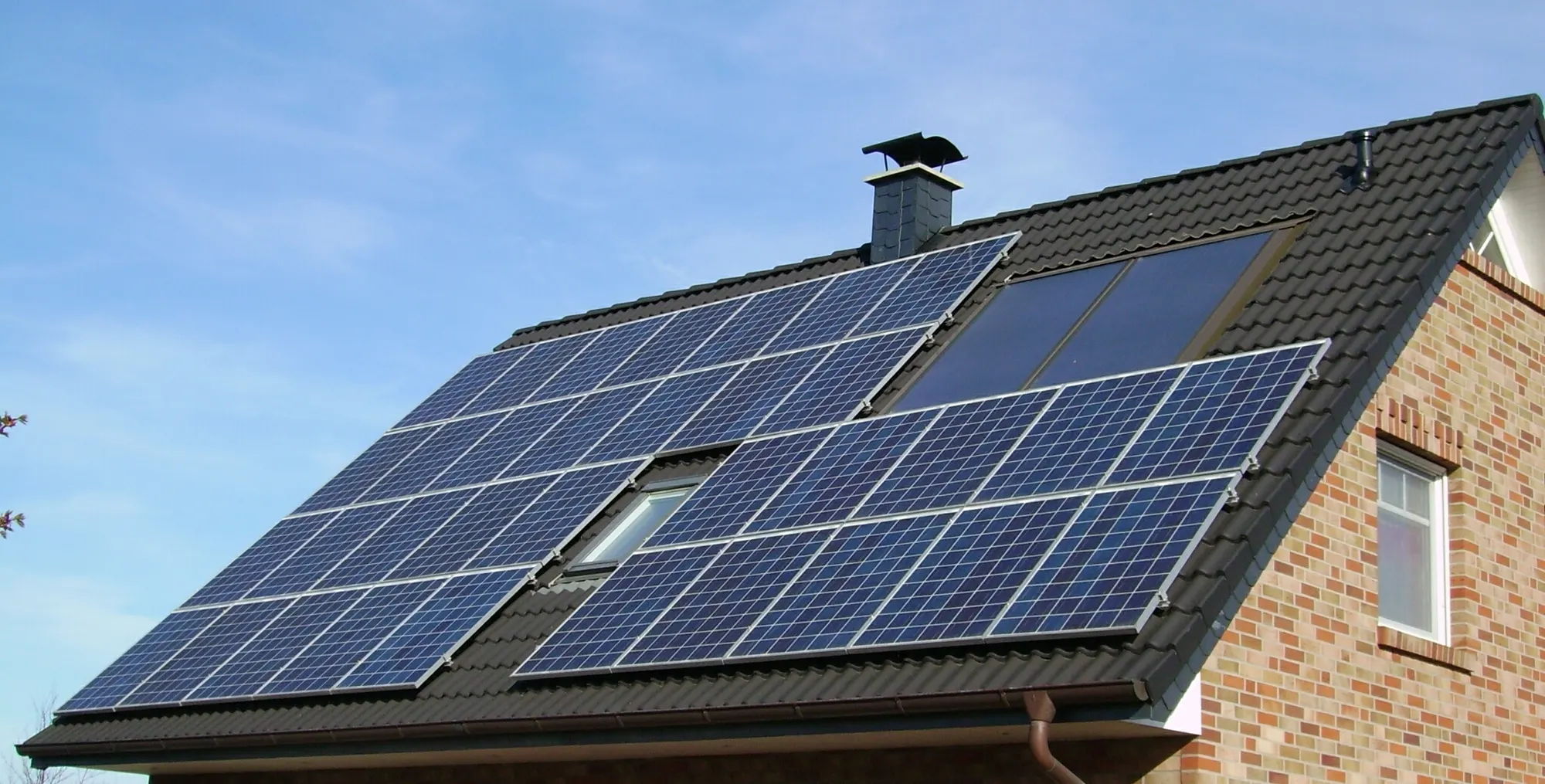
Houston, Texas
Affordable Solar TX is a solar installation service for homeowners in Houston, TX on CenterPoint lines. It would size panels to your home's yearly use, then show in writing what each type of buyback plan would pay for your extra power, so you choose system and plan together, before signing either.
Get your free quote Try the buyback check
Private website concept.
North Houston, Texas
Affordable Solar TX installs rooftop solar across north Houston and out through Spring and the Katy prairie edge, where the retail power plan on your bill decides what an array is worth. We size from your last year of use, then put the buyback arithmetic for each plan beside the quote.
What customers say
Serving Spring and nearby towns
What we do
Call or visit
| Phone | (832) 479-4799Call to book an assessment. |
|---|---|
| Estimates | Free, in writingDesign and price as separate documents. |
Why homeowners pick us
Our story
Started quoting solar in north Houston.
Rooftop systems across Spring, Humble, Jersey Village and West University Place.
Where we work
The proposed service would read how your home uses power before anyone draws panels, and pick the plan after the system is sized. Durations are typical, not promised.
Twelve months of 15-minute use from Smart Meter Texas, your ESI ID and your current EFL.
Roof, shade and panel checked; the system sized so yearly output stays at or below yearly use.
Your export profile scored against three buyback structures, using EFLs printed that day.
Permit, one to three days on the roof, inspection, then CenterPoint approves the connection.
Move to the plan you chose, timed to your contract end date to avoid a termination fee.
Proposed service. Each one answers a separate question, so a quote never hides a decision inside one number.
Layout, DC kW, equipment, yearly kWh, cash price and price per watt, with battery, panel and roof work on their own lines.
Checklist for a quote you have
Monthly export kWh and what they would earn under each buyback structure, with caps, expiry rules and renewal dates. You choose the plan.
Checklist for solar and a planYearly output next to twelve months of real use, and a plain yes or no on whether output stays at or below use.
Test a size in the buyback checkOne system, three plans. Enter your system and use, then the export value from each plan's EFL. The page works out what the exports would earn on each, and whether the system stays at or below your yearly use. Everything runs on this device; nothing is sent or stored.
Yearly output–
Size-to-use ceiling–
Exported a year–
Enable JavaScript to run the buyback check.
Starting values are the homepage's illustrative calculation: a typical Texas system and average Texas use (EcoGen, September 2026 Edition) with hypothetical export values of 12¢, 6¢ and 3¢, not taken from any EFL. Caps are applied to an even monthly split of exports, a simplification; real exports peak in summer. This is not advice on any named provider.
Ask one question before you compare solar quotes in Houston: who will buy the power your panels send back to the grid? It isn't the installer, and it isn't CenterPoint.
CenterPoint Energy is the delivery utility for most of Houston. It carries power to your home over its lines. You buy the electricity itself from a retail electric provider (REP), the company named on your plan. Texas has no statewide net metering. Under Texas Utilities Code §39.916, a home in a retail-choice area like CenterPoint's sells its surplus solar power to the REP that serves it, "at a value agreed to" between the homeowner and that REP. CenterPoint's own solar page sends buyback questions to your REP.
So your plan, not the solar quote, sets the value of every exported kilowatt-hour (kWh). The buyback is what the REP pays or credits for those exports. The REP buyback plans described in EcoGen's Texas research fall into three structures:
| Buyback structure | How exports are valued | What to watch |
|---|---|---|
| Credit capped at energy charges or usage | A bill credit per exported kWh, up to your energy charges or your monthly use | Exports above the cap can earn nothing; base and delivery charges may not be offset |
| Fixed export rate | A set price per exported kWh | Whether the rate holds for the whole contract |
| Real-time wholesale rate | The market price at the time you export | The value per kWh is not fixed, so ask how it has moved |
The terms are printed on your plan's Electricity Facts Label (EFL), the plan fact sheet your REP provides. Read four lines before you count on any export value:
Illustrative calculation · what the plan does to export value. A typical Texas system of 9.29 kW (EcoGen Texas cost page, September 2026 Edition) × 1,428 kWh per kW per year (EcoGen CSV v1-2026, Houston production factor) ≈ 13,266 kWh a year. Assume 40% is exported because nobody is home at midday (assumption) ≈ 5,306 kWh. At hypothetical export values of 12¢, 6¢ and 3¢ per kWh (not from any EFL), those exports are worth about $637, $318 or $159 a year. Same roof, same panels: about $478 a year apart, decided by the plan alone.
Your real export share depends on when your household uses power. The assessment below would measure it from your meter data.
Ask every installer to show the estimated yearly output next to your home's actual yearly use, both in kWh. Output should not exceed use, for a legal reason and a money reason.
Under §39.916(k), neither you nor the system owner has to register with or be certified by the Public Utility Commission (PUC) if the estimated yearly output is at or below your estimated yearly use. On the money side, every kWh beyond your own use has to be exported. On a capped-credit plan, extra panels can make power that earns nothing.
A "typical" size is not automatically the right size for your house:
Illustrative calculation · size-to-use check. The 9.29 kW typical Texas system makes about 13,266 kWh a year at 1,428 kWh per kW. Average Texas use in the EcoGen CSV v1-2026 is 1,096 kWh a month, or 13,152 kWh a year. Output lands about 0.9% above that use. For that household, the size-to-use ceiling is about 9.2 kW (13,152 ÷ 1,428).
The overshoot is small, but it shows that a size taken from a state average was never tested against a real household. Test your own quote in three steps:
DC kW is the panels' rated output added together: twenty-four 400-watt panels make 9.6 kW DC. Both the price per watt and the CenterPoint incentive are figured on it.
We start with how your home uses power, before anyone draws a panel layout. The on-site part would take about 90 minutes (Illustrative duration), plus some preparation on your side.
A home running air conditioning through the afternoon uses more of its own solar, so a capped credit may cost it little. A home that's empty all day exports more, and the plan becomes the bigger number.
We quote a system you own and hand you three documents, with any extra work on separate optional lines. If a field below is blank on any quote you collect, ask for it before you compare.
| Document | What it shows | What you use it for |
|---|---|---|
| System quote | Layout, DC kW, equipment models, yearly kWh, cash price, price per watt; the CenterPoint incentive line only if the installer is an enrolled participant; who files the permit and the interconnection | Checking the price and comparing installers on the same terms |
| Plan-match sheet | Monthly export kWh; their value under each buyback structure at that day's EFL rates; caps, expiry rules, renewal dates; what changes if the rate drops | Choosing a plan by its export terms |
| Size-to-use note | Yearly output next to 12 months of actual use; a plain yes or no on whether output stays at or below use | Staying outside PUC registration and skipping panels whose only job is low-value exports |
The plan-match sheet would compare plan structures from public EFLs. It would not recommend a named provider and would take no commission from any REP. You would choose the plan yourself.
A bundled quote hides three decisions in one number: is the solar fairly priced, do you need a battery, and is the roof or panel work real? Leases and power-purchase agreements are outside this proposal.
This shows the three documents for one house. Every figure is hypothetical except the 1,428 kWh production factor (EcoGen CSV v1-2026) and CenterPoint's $135 per kW.
Illustrative example · size-to-use note. A single-family home inside City of Houston limits, on CenterPoint lines, used 12,000 kWh over 12 months of Smart Meter Texas data. Ceiling: 12,000 ÷ 1,428 ≈ 8.4 kW. A layout of twenty-one 400-watt panels is 8.4 kW DC and makes about 11,995 kWh a year (8.4 × 1,428). Output stays at or below use: yes.
The plan-match sheet then depends on who is home when the sun is up. Take the same 8.4 kW system and two routines for the same house:
Illustrative example · plan-match sheet. Routine A: someone is home and the air conditioning runs through the afternoon, so 25% of output is exported (assumption), about 2,999 kWh a year. Routine B: the house is empty on weekdays, so 50% is exported (assumption), about 5,998 kWh a year. The table values those exports at hypothetical prices of 12¢, 6¢ and 3¢ per kWh (not from any EFL).
| Illustrative example · routine | Exported kWh a year | At 12¢ | At 6¢ | At 3¢ | Spread |
|---|---|---|---|---|---|
| A · home in the afternoon | 2,999 | $360 | $180 | $90 | $270 |
| B · empty on weekdays | 5,998 | $720 | $360 | $180 | $540 |
How to use the answer: for Routine A, the plan choice moves export value by about $270 a year, so the plan's price for the power you buy can matter as much as its buyback. For Routine B, the spread doubles to about $540, so the buyback line on the EFL deserves the most attention. If a capped credit is on the table, the sheet would also compare each month's exports with that month's cap, because exports above the cap earn nothing.
Illustrative example · system quote line. If the installer is a CenterPoint participating contractor, the incentive on an 8.4 kW DC system would be 8.4 × $135 = $1,134, shown as a credit on the installation invoice.
The same roof, the same panels and the same quote can be worth very different amounts to two households. That is why we size the system and screen the plans in one visit.
Strip out everything that isn't solar before you judge a solar price. Then divide.
Price per watt ($/W) is the solar price divided by DC watts, so quotes of different sizes compare. For a benchmark, EcoGen's Texas solar cost page puts Texas at a $2.57 per watt State benchmark (September 2026 Edition, prices as of September 25, 2026). That is a cash price for a system the homeowner owns, with a typical 9.29 kW system at $23,875. The figure is a modeled benchmark before incentives, not a quote, so treat a gap as a question, not a verdict.
Run the check in three steps:
Illustrative calculation · $/W quote check (State benchmark: EcoGen Texas, September 2026 Edition). Example quote: 9.6 kW DC, solar-only cash price $26,400, plus a battery at $14,000 and a main-panel upgrade at $1,800 on separate lines (all hypothetical). Solar only: $26,400 ÷ 9,600 W = $2.75/W, about $0.18/W (7%) above the $2.57/W State benchmark. Divide the whole $42,200 by 9,600 W and you get $4.40/W, which compares the wrong thing. If the installer is a CenterPoint participating contractor, the incentive comes off afterwards: 9.6 kW × $135 = $1,296. Only $2.57/W and $135/kW are sourced figures.
A $2.75/W quote may still be fair. Ask the installer what the extra $0.18 per watt pays for.
| Driver | Where it shows on the quote | What to ask |
|---|---|---|
| System size | DC kW on the solar line | Is it at or below your yearly use? Extra kW cost money and may only add low-value exports |
| Layout limits | Panel count and yearly kWh | Did a deed restriction, POA rule or historic rear-half layout change the design, and what yearly kWh does each allowed layout make? |
| Roof faces and shade | Yearly kWh per face | Which faces were used, and how was shade accounted for? |
| Equipment | Panel and inverter models | Which models, and what would a different choice change per watt? |
| Workmanship warranty | Warranty term in years | What does a longer term add to the price, and what does it exclude? |
| Paperwork | Who files the permit and interconnection | Is that work in the solar price or billed separately? |
Battery, main-panel and roof work stay on their own lines, so none of them should move the solar $/W.
| Incentive | Status | What it means for your quote |
|---|---|---|
| Federal residential clean energy credit (25D) | The IRS says the credit is not available for property placed in service after December 31, 2025 | A quote that subtracts a 30% federal credit from a system you own is out of date |
| CenterPoint solar incentive | CenterPoint pays $135 per kW DC, capped at 15 kW, for existing single-family homes and new systems only; you must sign an interconnection agreement; the participating installer applies it as a credit on your invoice | Not paid to you directly. Ask whether the installer participates, where the credit appears, and whether 2026 funds remain |
| Texas property-tax exemption | A solar energy device can qualify for an exemption under Tax Code §11.27; you apply to your appraisal district on Form 50-123, per the Texas Comptroller's exemptions page | Ask the installer for the equipment details the form needs |
The City of Houston has no zoning, so no zoning board decides where your panels go. Other rules can still change a layout, so check them before you settle on one.
Outside the City of Houston, the permit office changes, and so does the first question. Coverage of these towns covers these towns:
After you sign, the work usually runs in this order. Houston's exact permit and inspection steps weren't confirmed for this page, so ask the installer to write them down.
Step 7 is easy to forget. Time it to your contract end date to avoid an early-termination fee. EcoGen's Texas research notes that REP credits can take up to three billing cycles to start, so ask when yours begin.
CenterPoint handles interconnection, the approval to connect your system to its lines. Under §39.916, it must allow interconnection if your system carries a five-year warranty against breakdown or undue degradation and doesn't exceed your service capacity. Get that warranty in writing.
CenterPoint's current program is the $135 per kW incentive above, and it runs through the installer, not you. CenterPoint's program fact sheet lists the installer's steps: register with CenterPoint, determine the DC system size, create a PVWatts report, label the incentive on the invoice, then submit the application. Ask the installer to show you each step, plus CenterPoint's interconnection application and any fees.
Your REP buys your exports. Buyback questions go to the REP, not CenterPoint.
If your bill comes from Entergy Texas, as it can on a small fringe of northeast Houston, you aren't in a retail-choice area. One company delivers and sells, and plan-matching works differently. Check your bill first.
Three things need watching after installation: output, warranties and your plan's renewal date.
Use this list, or the quote checklist on this site, with every installer you talk to.
The U.S. Treasury's guide to buying and financing solar panels goes deeper on financing.
Does Houston have net metering? Not statewide. In CenterPoint territory, the plan you pick from your REP decides what exports earn. A quote that promises "net metering" without naming a plan structure hasn't priced your exports.
Can I still get the 30% federal tax credit? Not for a system you own placed in service after December 31, 2025, according to the IRS. Check that no quote counts it.
How long until solar pays for itself? EcoGen's Texas cost page shows no payback figure yet for retail-choice areas like CenterPoint's. Any payback a seller shows rests on an assumed export value, so ask which plan structure and EFL it used, then compare it with the plan-match numbers for your own export share.
Should I add a battery? A battery stores midday solar for use at home later instead of exporting it. Weigh its separate price against what your exports would earn on the plans you're considering: the lower the export value, the more each stored kWh is worth to you. Keep it on its own line so it never hides in the solar price.
Would you choose my electricity provider for me? No. We show what your exports would earn on each plan structure. You pick the plan.
Is Affordable Solar TX the same business as other "Affordable Solar" companies? Ask any installer for their TDLR electrical contractor licence number, check it against the company you are talking to, and get the name on the contract in writing before you sign.
Outside the City of Houston the permit office changes, and so does the first question. Coverage of these towns is proposed and not yet confirmed.

Pick your town and what you want priced. The page builds the list to bring to every installer, so each quote answers the same questions. It runs on this device: nothing is sent or stored, and there is no form to submit.